Sweater Dream: A Luxe Script Font for Handmade Brands
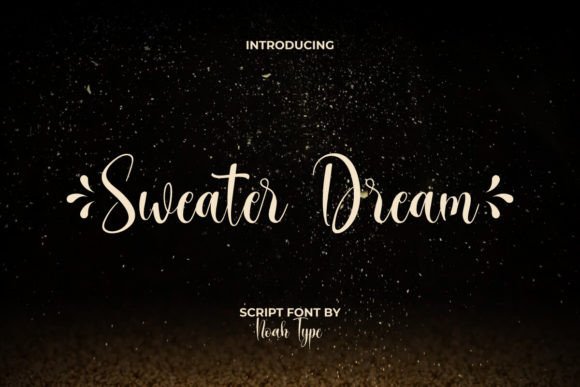
If you’ve ever held a beautifully labeled candle, admired a wedding welcome sign with soft brush strokes, or paused over a boutique tag that felt *just right*, you know how much a font can shape perception. Sweater Dream isn’t just another script font—it’s a thoughtful, calligraphic typeface built for makers who care about texture, tone, and tactile appeal. Designed with delicate brush lines and elegant ornaments, it carries quiet luxury without sacrificing clarity. As someone who hand-presses labels, cuts vinyl for farmhouse signs, and designs printable invitations for real clients, I reach for Sweater Dream when I need warmth, distinction, and commercial readiness—all in one file.
Why Sweater Dream Fits Real Craft Projects
This is a display-focused script font—ideal for short, high-impact phrases where personality matters most. Think “Hand-Poured,” “Est. 2023,” “With Love,” or “Gather & Grow.” Its flowing rhythm and subtle swashes give movement to static text, while the fine-line construction keeps it crisp even at 18–24pt on printed cards or 3-inch vinyl stickers. Unlike overly ornate scripts that blur when scaled down, Sweater Dream holds its integrity on product tags, jar labels, and Cricut-cut iron-on transfers for tote bags or mugs. It’s not meant for paragraphs—but it shines as a headline, monogram, or decorative accent in SVG layers, planner covers, or digital wall art templates.
Where It Works Best (and Where to Use It Thoughtfully)
I use Sweater Dream across my physical and digital product lines—and here’s what’s proven reliable:
- Candle & soap labels: Paired with a clean sans serif (like Montserrat or Poppins) for ingredient lists, Sweater Dream adds artisanal charm to front-facing branding without overwhelming the label.
- Wedding stationery: It elevates “Mr. & Mrs.” on foil-stamped invites or “Welcome” on chalkboard-style welcome boards—especially when layered over neutral textures like linen or kraft paper.
- Farmhouse and seasonal signs: Cut from baltic birch or printed on canvas, phrases like “Home Is Where the Heart Is” or “Cozy Season” gain instant character with Sweater Dream’s gentle contrast and organic flow.
- Digital printables: In planner inserts or quote-based wall art, its brush-line authenticity reads as handmade—even when delivered as a PDF download.
- Boutique packaging: On hang tags for jewelry or ceramic mugs, it signals intentionality and care, helping customers associate your brand with quality before they even touch the product.
For small-format uses—like 1-inch sticker labels or mini gift tags—I recommend using the uppercase version or simplified alternates (if included). Always test cut files at actual size in Silhouette Studio or Cricut Design Space: Sweater Dream’s fine terminals hold up well, but avoid scaling below 12pt for physical die-cuts unless you’re using a high-resolution printer or laser cutter.
Pairing It Well: Contrast Is Key
Sweater Dream thrives alongside strong typographic contrast. As a script font, it needs grounding—and that’s where pairing becomes strategic. For product packaging, I pair it with a warm, humanist sans serif (think Nunito or Quicksand) for body text: friendly, legible, and equally approachable. For wedding suites, I’ll layer it over a refined serif like Playfair Display for ceremony programs—elegant but never competing. Avoid stacking two expressive scripts; Sweater Dream’s voice is distinct enough to carry weight on its own. When building SVG bundles for crafters, I include both the Sweater Dream headline and a matched sans serif in the same design file—so buyers get cohesion, not confusion.
What’s Inside the Font File (And Why It Matters)
The Sweater Dream font includes stylistic alternates, ligatures, and swash characters—details that make a difference when designing for repeat customers. The ornaments aren’t just decorative flourishes; they’re functional accents you can drop beside names on birthday invitations or frame quotes in printable art. If your version supports OpenType features, enable contextual alternates in Adobe Illustrator or Affinity Designer to unlock natural letter connections—no manual kerning needed. File formats typically include OTF and TTF, compatible with Cricut Design Space (via upload), Silhouette Studio (with Basic Edition or higher), Canva Pro, and all major desktop design apps. While multilingual support isn’t extensive, basic Latin-1 coverage handles English, Spanish, French, and German accents—enough for most small-batch labels and greeting cards.
Licensing for Sellers: Clarity You Can Count On
As a full-time printable creator and Etsy seller, I only use fonts with clear commercial licensing—and Sweater Dream delivers that. Its license permits use in physical products (like printed cards, embroidered patches, or engraved wood signs), digital downloads (PDF planners, Canva templates, SVG cut files), and merchandise (t-shirts, mugs, stickers). You may also use it for client work—say, designing a logo for a local bakery—as long as the font file itself isn’t shared or embedded in editable source files. Just remember: you’re licensing usage rights, not ownership. Keep your copy updated, store license documentation with your design assets, and always verify terms if bundling Sweater Dream into a larger template pack for resale.
A Font That Grows With Your Shop
Sweater Dream doesn’t shout—it invites. It’s the kind of script font that feels familiar yet fresh, luxurious yet grounded. Whether you’re launching your first candle line or expanding your invitation suite for fall weddings, it gives your typography a consistent emotional signature: thoughtful, warm, and quietly confident. It won’t solve every layout challenge, but when used intentionally—with attention to scale, contrast, and context—it becomes part of your brand’s visual language. And in a crowded marketplace where handmade means something, that kind of consistency isn’t just nice. It’s necessary.